
Find community and belonging at Knox Vancouver
Worship, thoughtful media, arts, community programs, and practical care for people at Knox and across the neighbourhood.
DAILY MEDITAION
A few quiet minutes for the day
Watch todays reading and browse the past year ->.
This Sunday · NOVEMber 1 · 10 am
The Tears Are Still There
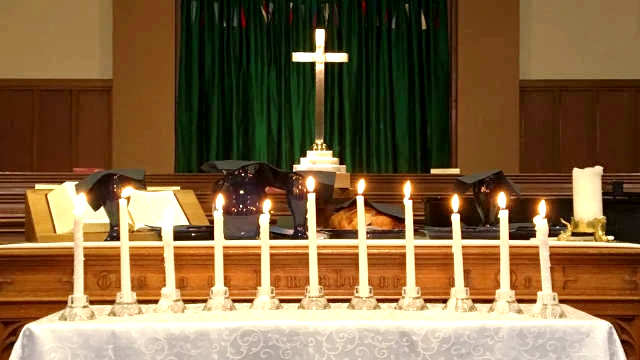
 On All Saints Sunday, we remember those who have died and bring our grief before God. Revelation’s promise that God will wipe away every tear offers an intimate picture of divine care: our sorrow is honoured by the wounded Christ, who has himself wept..
Reading: Revelation 7:9-17
with Rev. Dr. Richard Chung
CURRENTLY
Now at Knox
Find worship, public events, gatherings and regular ways to take part. View the complete calendar.
This Week
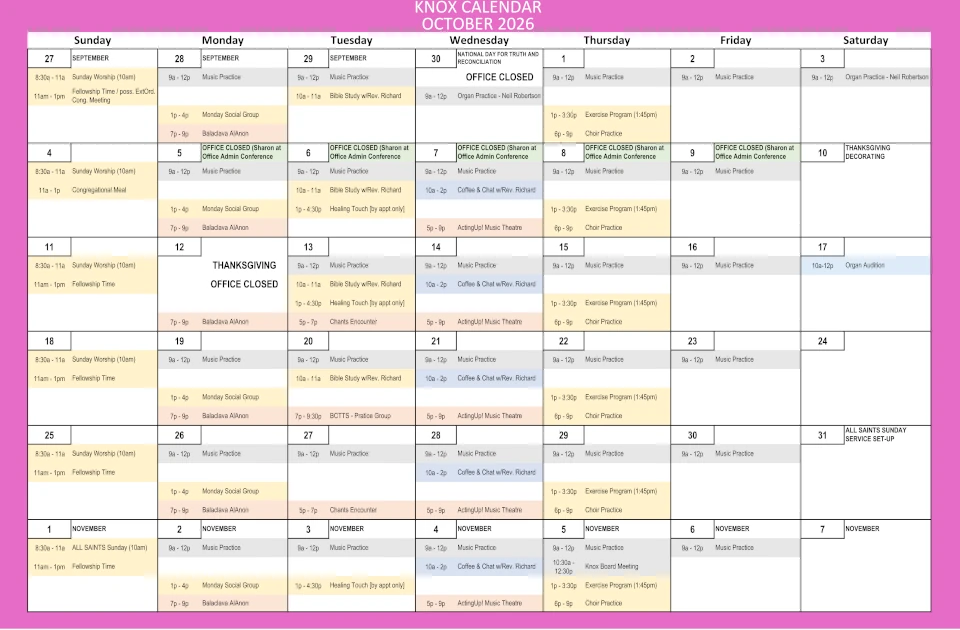
A quick view of what is happening.
Sunday · 10 am
Worship Service
Sunday · 11:30 am
Fellowship and congregational meeting
Monday · 1 to 4: pm
Activities Drop-In: Monday Social
Tuesday · 10 am
Bible Study: Exodus, The Long Way Out
Wednesday · 10 am to 2 PM
Coffee with Richard
Activities & Fitness
Drop-ins for art, cards and coffee, fitness, and healing touch create pathways into wellness and belonging.
Intercultural Life
Shared meals, stories, music and partnerships that bring cultures and generations into relationship.
Care & Volunteering
Use your time and gifts in worship, community programs, outreach and practical care.
OUTREACH REFLECTION
A Place in The Changing World
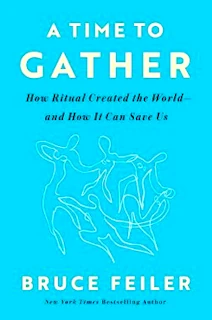
In our turbulent, 24/7/365 world, faith is more than a Sunday Worship ritual. Faith is the heart of our daily endurance, as we lean on one another, share needs and imperfectly stumble forward together; still remaining deeply connected to something much larger than ourselves. The process of being human.The process begins at home, our sanctuary of safety, where we share our innermost thoughts, wrapped in dependable trust and comfort. Further, “home” extends beyond our front doors. It is also in the wider places where our community constantly refines itself into being neighbours; those who share our aspirations. This process guides us, our engagement, and our behaviour. In a rapidly changing world, it is faith that grants us the grace to navigate this human path forward, hand in hand with our neighbours.Our transformation lives in a quiet intersection of reason, private reflection, and deeply held values. Ultimately, what we say, the quiet impact of our deeply held thoughts, and the things we actually do, shape how we and our neighbours build community. Our faith and grace act as both guardrail and compass, through all relentless modern pressures.The Bible’s ancient texts reveal their realities and evolution, even within their own times. Today however, an AI journey of inquiry lets anyone immediately obtain meaningful direct Biblical references; “According to the Bible, what would Jesus do if…?” or “Find passages in Scripture that speaks to marginalized groups or …?”. Apps, like the mobile Android and iOS app “ChristianAI” by Ostokone, now directly interrogate Scripture for you. Insights from books like Bruce Feiler’s “A Time To Gather,” speak to today’s Christian realities. Applying the Bible to navigating the process of being human has a laser focus, while still guided by personal faith.
GREAT READS
A Time To Gather
by Bruce Feiler
uncluttered faith
by Joshua Becker
Separation of Church & Hate
by John Fugelsang
GREAT MUSIC
Ordinary
Your Way’s Better
by Forrest Frank
The Prodigal
by Josiah Queen
CLEAR PRACTICAL PATHWAYS
How Can Knox Help ?
NEW HERE
Find out more about worship and what it is like to visit Knox.
Start to plan your visit by filling in the form below
MEMORIALS & LIFE EVENTS
Compassionate support for funerals, memorials, weddings and important transitions.
RENTALS
Spaces for performances, filming, photography, weddings and neighbourhood groups.
STAFF & CONTACTS
Spaces for performances, filming, photography, weddings and neighbourhood groups.
COME AS YOU ARE
Just show up Sunday at 10 am
or connect with us to arrange a visit beforehand here…