
Walking the Long Way
Lenten Book Study Feb-Mar 2026

Easter Symbols

What is Shrove Tuesday?

Pancake Art
The Meaning Behind the Ashes
Lent and the Colour Purple

How to make Palm Crosses

Maundy Thursday
Lenten Poem
Knox During Lent Seasons
What is LENT?
 Have you ever wondered what people are talking about when they say they’re giving something up for Lent?
Lent is the 40 days (not including Sundays, so typically 46 days) from Ash Wednesday to the Saturday before Easter. Lent is a time of preparation and an opportunity to go deeper with God. a time for personal reflection that prepares people’s hearts and minds AS Good Friday and Easter arrive.
What Are the Key Days During Lent?
Shrove Tuesday / Pancake Tuesday is the day immediately preceding Lent, often a time to eat rich foods (fats, eggs, dairy). Also for confession (being “shriven”) before the Lent season.
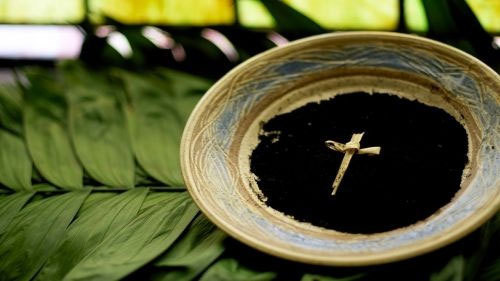
Ash Wednesday is the first day of Lent. A solemn day when you may see people with a smudged, black cross on their foreheads from the ashes of the Ash Wednesday service. The ashes symbolize mortality (“Dust you are, and to dust you shall return”), repentance and our grief for the things we’ve done wrong.
Palm Sunday, the start of Holy Week, commemorates Jesus’ ‘triumphal entry’ into Jerusalem where he was greeted with crowds waving palm branches and crying ‘Hosanna!. Ironically, these same voices that greet Jesus as Messiah and King will be the same voices that shout ‘Crucify him!’ just a few short days later on Good Friday. Traditionally, palm branches or palm crosses are given out on Palm Sunday as a tangible sign of Jesus’ ‘triumphal entry’ into Jerusalem.
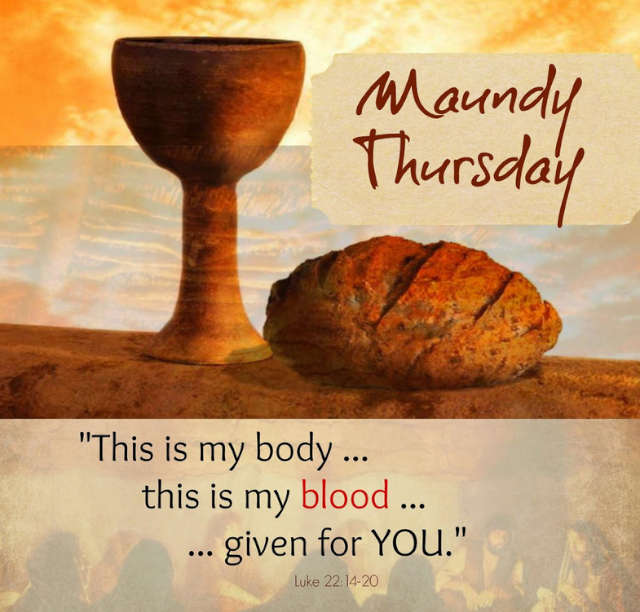
Maundy Thursday, the day before Good Friday, commemorates the Last Supper, when He washed his disciples’ feet, giving them the “New Commandment” (Mandatum) to love one another.
Good Friday is the day Christians remember Jesus’ death. The “Good” reflects how Jesus’ death was a sacrifice on our behalf so we can receive God’s forgiveness for our wrongs.
Holy Saturday Recalls the vigil, the ‘keeping watch’ at the tomb of Jesus. This is the day on which Lent traditionally ends. It marks the final day of Jesus’ death, which he spent resting in his tomb.
Easter Sunday is the joyful celebration of Jesus rising from the dead to give us the opportunity of eternal life. While people still die, Jesus made the way for people to have a relationship with God in this life and to spend eternity with Him in heaven.
What Happens During Lent and Why?
The three main things people focus on during Lent are prayer, fasting (abstaining from something to reduce distractions to focus more on God) and giving, or charity.
Prayer during Lent focuses on our need for God’s forgiveness. It’s also about repenting (turning away from our sins) and receiving God’s mercy and love.
Fasting, or giving something up, is a very common practice during Lent. The idea is that giving up something that’s a regular part of life, like eating dessert or scrolling through Facebook, can be a reminder of Jesus’ sacrifice. That time can also be replaced with more time connecting with God.
Giving money or doing something good for others is a way to respond to God’s grace, generosity, and love. For example, some people spend time volunteering or donate the money they would normally use to buy something, like their morning coffee.
Jesus sacrificed Himself on Good Friday to bear the punishment for all our wrongdoings and offer us forgiveness. He was raised from the dead on Easter Sunday to give us an opportunity to have a relationship with God for eternity.
The Wilderness & the Way: Matthew & Luke on the Lenten Journey
The season of Lent, often seen as forty days of reflection, fasting, and penance, finds its scriptural heartbeat in Jesus’s temptation in the wilderness. While both Matthew and Luke recount this pivotal event, they do it through distinct theological lenses. Matthew offers an “internal” perspective, framing Lent as the fulfillment of Jesus as the Messiah through examples of humanity, compassion and universal salvation. Luke alternately provides an “external” perspective, presenting Lent as a universal movement toward social justice and the inclusion of the marginalized.
Matthew: The Internal Discipline of the Heart
Writing for a Jewish-Christian reader, Matthew roots Lent in internalized righteousness. In Matthew 4:1-11, Jesus’s temptation parallels Israel’s forty years in the desert. Where Israel faltered, Jesus succeeds. Matthew focuses on the internal struggle to remain faithful to the Old Testament Law’s spirit.
In the Sermon on the Mount, Matthew emphasizes that spiritual practices must be private. Regarding fasting, Jesus instructs: “But when you fast, put oil on your head and wash your face, so that it will not be obvious to others” (Matthew 6:17-18). For Matthew, Lent is an internal audit of the soul. A secret alignment of the heart with God rather than a public performance. An “internal” work of any disciple perfecting their devotion.
Luke: The External Mission of the Spirit
Luke, writing for a broader Gentile audience, shifts the focus outward. His account of the wilderness (Luke 4:1-13) concludes with Jesus returning “in the power of the Spirit” to Galilee and declaring his manifesto. Here, Lent is the preparation for a visible, external mission.
Immediately following his fast, Luke’s Jesus quotes Isaiah, sent to “proclaim good news to the poor… freedom for the prisoners and recovery of sight for the blind” (Luke 4:18). Luke’s Lenten “desert” is the training ground for a life of radical hospitality and social inversion, including for the periphery of society.
A Comparative Focus
 Main Focus
Matthew
Purity of intent and private devotions
Luke
Empowerment for mission and justice
Biblical Context
Fulfillment of prophecy (personal)
Inauguration of a universal Savior bridging into the Acts of the Apostles Peter (Acts 1-12) & Paul (Acts 13-28)
(church & Ministry)
Lenten Call
“Go to your room & close the door”
“Proclaim liberty to the captives”
Conclusion: The Unified Path

Ultimately, these perspectives are complementary. Matthew presents Lent as the essential pruning of the ego in the quiet of the heart, ensuring our devotion is sincere. Luke reminds us that this internal work is hollow without the fruit of external compassion. Together, they form a fuller Lenten vision where we travel inward to find God so that we are prepared to travel outward to serve our neighbor.
Easter Hope Amidst the Ruins: Easter in a Time of War
This Easter, the message of resurrection feels strikingly surreal. As we celebrate life emerging from the tomb, our news feeds are filled with images of death, destruction, and wars. It is easy for the darkness of modern conflicts to overshadow the light of the empty tomb. How can we find hope in Christ’s return when the world feels like it is tearing itself apart?
Reconciling today’s turmoil with resurrection is the very essence of Easter, as “birth pains” of a new, restored world, launched by the resurrection.. The resurrection was never a promise that suffering would vanish instantly, but rather an announcement that evil, violence, and death have been decisively defeated. When Jesus rose, He broke the power of darkness, proving that life is stronger than the grave. Today’s wars, as tragic as they are, do not invalidate Easter; they mean that we are still living in the “interim space” between Christ’s victory and his final return.
The Bible explicitly warns of increased conflict before Jesus returns in Birth Pains (Matthew 24:6-8): Jesus taught that wars and rumors of war would occur as part of a chaotic “pre-new-world” period. These are seen as necessary, though painful, stages before final restoration. The wars in the Middle East and beyond are more signs of the times, that bring a focus on anticipation. The promise of Jesus’ return is that he will make “all things new” and bring a final justice that earthly powers cannot. War and political solutions aside, we look to the Prince of Peace, whose kingdom will end all violence.
Easter calls us to be “children of the resurrection,” empowered by that first dawn to be ambassadors of love in a chaotic world. Refusing to be numb to suffering, instead actively praying for peace and supporting the vulnerable are the focus. We look beyond the surface of headlines to hold onto the divine promise that no night is too dark for the light of Christ to overcome.
We reconcile the chaos by resting in the victory already won, allowing the hope of Jesus’ return to drive out fear, revenge, and despair. Happy Easter. He is risen, and He is coming again.